International YPO Survey Reveals Rising Confidence Across Key Markets
By Craig Kiggen
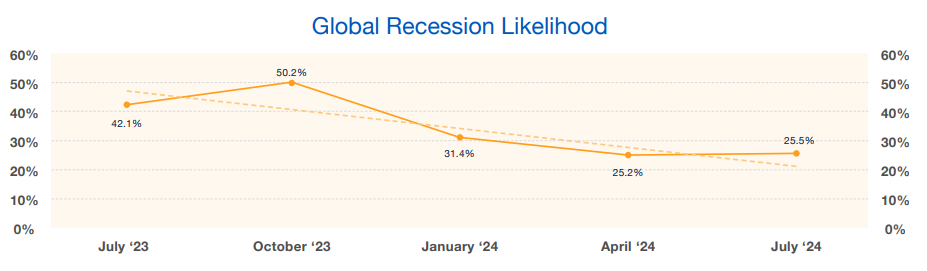
The findings of the recently published annual YPO Global Pulse survey paint a far more optimistic picture for the global economy compared to last year. Where economic uncertainty dominated business sentiment with many CEOs preparing for a potential global recession, there is now a far more optimistic outlook. Of the 2 400 global business leaders surveyed, only 25.5% now expect a global recession in the next 12 months, a significant decrease from the 42.1% who held this concern a year ago.
The sharp reduction in recession concerns indicates a strengthening confidence in the ability of markets to withstand economic challenges, despite ongoing global uncertainties.
Africa and Europe
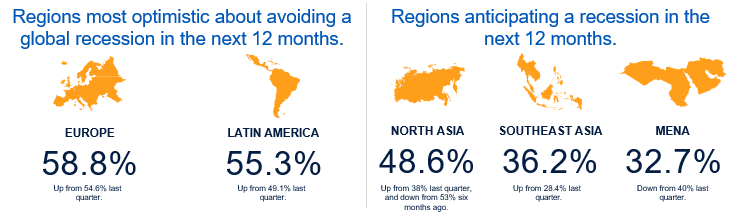
The survey further shows that this growing confidence is especially evident in the regional breakdown of the survey. In Africa, for instance, there has been a dramatic shift in outlook. A year ago, 54% of African respondents anticipated a local recession. That number has now dropped to just 16.1%, demonstrating a profound change in economic sentiment.
Europe has also seen a significant reduction in recession fears, with only 22.1% of respondents now expecting a recession, compared to 39% last year. These figures reflect a broader sense of economic resilience, as many regions navigate ongoing challenges with a more optimistic outlook.
These regional shifts indicate a broader confidence in the resilience of local economies, despite ongoing global challenges.
Inflation Fears
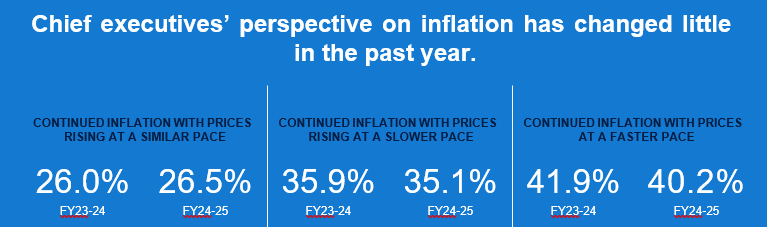
While the fear of recession may be fading, inflation continues to be a pressing concern. According to the survey, 6% of executives expect inflation to accelerate, while 26.5% believe it will continue at its current pace. These numbers are almost unchanged from last year, indicating that inflation remains a persistent challenge that leaders will have to contend with in the near future.
Inflationary pressures, driven by factors such as supply chain disruptions and geopolitical uncertainties, continue to influence pricing across industries.
So, while we haven’t seen the end of inflation, the fact that we aren’t seeing a sharp increase in concerns shows that executives are finding ways to cope with these ongoing pressures.
Stable Business Environment
Another important finding from the YPO Global Pulse survey is the relative stability in the business environment. Despite ongoing inflationary pressures, the overall business climate has shown little change in terms of its impact on company operations. This suggests that business leaders are approaching the current economic landscape with caution but also with a sense of preparedness.
Many are focusing on careful planning and operational efficiency to navigate the uncertainties they face, allowing them to maintain a steady course.
Interestingly, the survey also found that company size does not significantly influence the outlook of respondents. Whether large or small, businesses seem to be facing similar challenges and responding in much the same way. This consistency across different firm sizes underscores the shared nature of the global economic environment and the common strategies being employed to manage its challenges.
Overall, the findings of the YPO Global Pulse survey highlight an important shift in business sentiment. Fears of a recession have diminished across many regions, and while inflation remains a key concern, business leaders appear to be more confident in their ability to navigate the current landscape. This sense of resilience and cautious optimism signals that, although challenges remain, businesses are adapting and looking to the future with greater confidence.
The August 2024 Global Pulse survey was sent to all YPO members on 16 July 2024 and closed on 26 July 2024. A total of 2,411 chief executives responded to the survey (6.9% response rate, margin of error +/- 2.09%). The survey sample is representative of the larger YPO population across a range of demographics, including region, age, chief executive type and firm type. The members in this sample come from 104 different countries and range in age from 25 to 95 years old. Company size was a variable in this report’s analysis; however, analysis of the data showed no significant differences in answers across all questions based on company size.